
Flagler Community Supervision Status
FDC Community Corrections supervises adults on felony probation and specified post-prison release programs. The Flagler County Bunnell office is part of Circuit 7, which also covers Putnam, St. Johns, and Volusia Counties. Someone attached to this office is generally in the community, although a status can reflect that the person is jailed, unavailable, or alleged to have stopped reporting. The office does not operate a jail and does not create the county booking Release Date.
The Flagler County released-inmate search supplies the custody record that can precede supervision. A person can reach community supervision in more than one way. A Flagler judge may impose probation without any state-prison term. FDC can also supervise someone after prison under a release program. Parole and certain conditional-release decisions belong to the Florida Commission on Offender Review. The Flagler County Probation & Parole page explains those broader supervision types, while this facility page focuses on the Bunnell office and the records that point to it.
| Source | What it establishes |
|---|---|
| FDC supervised-population record | Operational status, supervision type, dates, and assigned location when shown |
| Flagler Clerk criminal docket | Probation sentence, conditions, modification, violation, or termination orders |
| FCOR order or calendar | Commission action for eligible parole or covered release matters |
| Perry Hall booking detail | When a local jail booking ended, not whether supervision ended |
Check Flagler Supervision Records
The official FDC active-offender search is the first public route. Search with the DC number when possible. A name search requires a careful identity comparison because similar names can appear. Open the matching record and read the supervision type, status, dates, and location shown. Then follow the office linked from the individual record, since an assignment can change even when the person lives in Flagler County.
- Locate the DC number in the FDC record, court file, or earlier prison record.
- Search the supervised population and compare the person's full identity and case information.
- Record the exact status term, supervision type, start and end dates, and office location displayed.
- Search the Flagler Clerk docket for the sentence, probation order, and any later modification or termination.
- Contact the listed FDC office if current public status or the office of record needs confirmation.
- Use the FDC public-record route when a maintained documentary record is required.
The captured FDC supervision lookup shows the official search path for active community records.
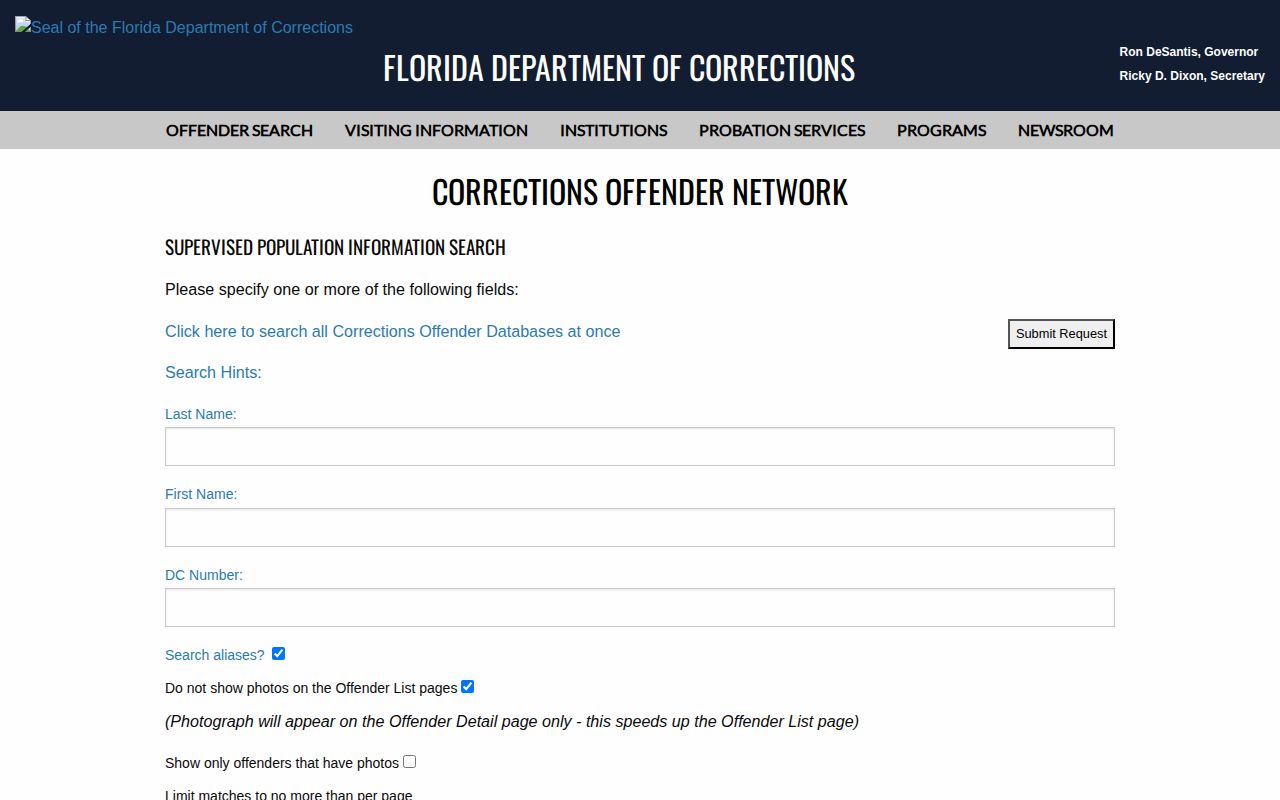
The result must still be tied to the correct identity and Flagler case; the screen is not a county jail roster or a list of all released people.
Flagler FDC Status Meanings
FDC uses precise terms that should be preserved. Active supports current community supervision. Active Suspense can mean the person is jailed or otherwise unavailable to the supervising officer, so it does not prove community release. Absconder describes unknown whereabouts or unavailability to supervision and can be linked to a violation warrant. It does not establish a new conviction. The court docket and direct agency confirmation remain necessary when a violation or warrant is at issue.
- Probation
- A court-ordered community sentence or supervision term that can exist without a state-prison release.
- Parole
- Conditional release under FCOR authority for a limited eligible Florida population.
- Absconder
- An FDC status indicating that the person is unavailable to supervision or whereabouts are unknown.
- Discharge
- The end of a custody or supervision term as recorded by the responsible authority.
FCSO's Judicial Process and Fugitive Unit serves warrants, but Flagler does not publish an exhaustive “released absconder list.” Commander reports and news releases cannot fill that gap. For one person, use the FDC status, Flagler court docket, and supervising office. A later arrest on an alleged violation creates a new custody event; it does not alter the original Perry Hall release date.
Flagler Probation Office Contact
FDC's current Circuit 7 directory identifies Bunnell Office 075. Call with the DC number and full identifying information, and ask whether the public record shows active supervision and which office is assigned. Staff may direct a documentary request to the public-record custodian and cannot disclose protected case-management details.
FDC Community Corrections, Bunnell Office 075703 East Moody Boulevard, Suite 6
Bunnell, FL 32110
Telephone: 386-437-7575
Fax: 386-437-8211FDC Probation and Parole Field Services
850-717-3444
co-supervision@fdc.myflorida.com
Absconder Unit
850-717-3475 during published weekday hours
The captured FDC Circuit 7 office page provides the current Bunnell location and circuit coverage.
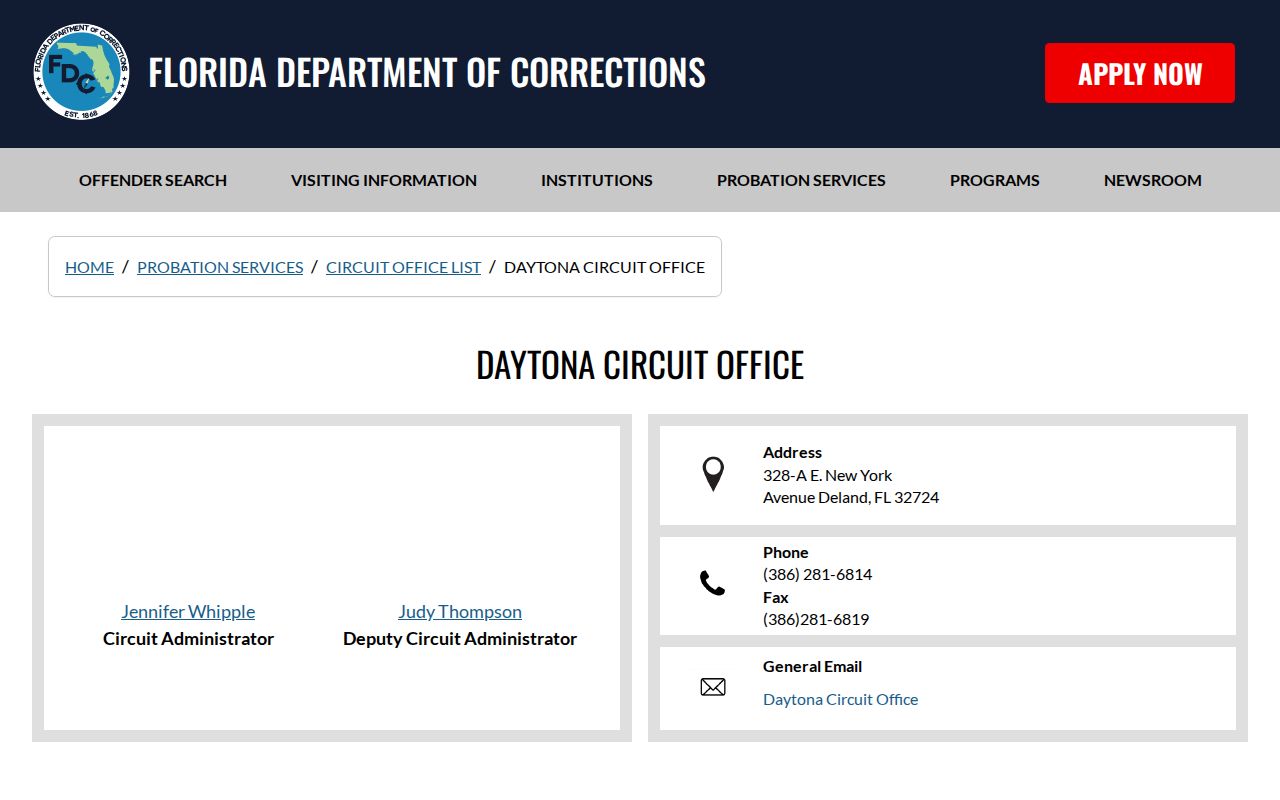
The office page should be checked again when a person record points elsewhere because assignment and directory information can change.
Flagler Probation Court Orders
The Flagler Clerk docket is the judicial source. A judgment and probation order state the court-imposed term and conditions. Later entries can show an affidavit of violation, warrant, modification, early termination, successful termination, or revocation. “Closed” case status alone does not prove that probation ended. Read the actual order and its filing date, then compare that result with FDC's operational record.
This split matters after a jail release. Perry Hall confirms when a booking ended. The court explains why the person was released and what sentence followed. FDC shows current field supervision. A person may leave jail on probation, remain supervised after a later state-prison release, or return to custody for an alleged violation. None of those events should be inferred from absence on a current jail roster.
Flagler Parole Decision Route
Florida parole is a limited legacy system, not a routine option for every state prisoner. FCOR explains that ordinary eligibility largely depends on offense date and statutory category because most offenses committed on or after October 1, 1983 are not parole eligible. A modern sentence should never be labeled “parole” merely because the person left prison under supervision. Check the offense date, § 947.16, and FCOR's official case information.
The Commission process can include an initial interview, a Presumptive Parole Release Date, later review, and an effective release proceeding. A presumptive date is not an actual prison departure. The FCOR voting schedule lists upcoming Commission business and detailed parole case lists where supplied. Available final orders for cases heard since July 15, 2015 can be searched through the official path using the DC number as the agency case number. Actual departure still requires an updated FDC release record.
The calendar screen captured for Flagler-related supervision research shows how Commission matters are scheduled, not how they were decided.
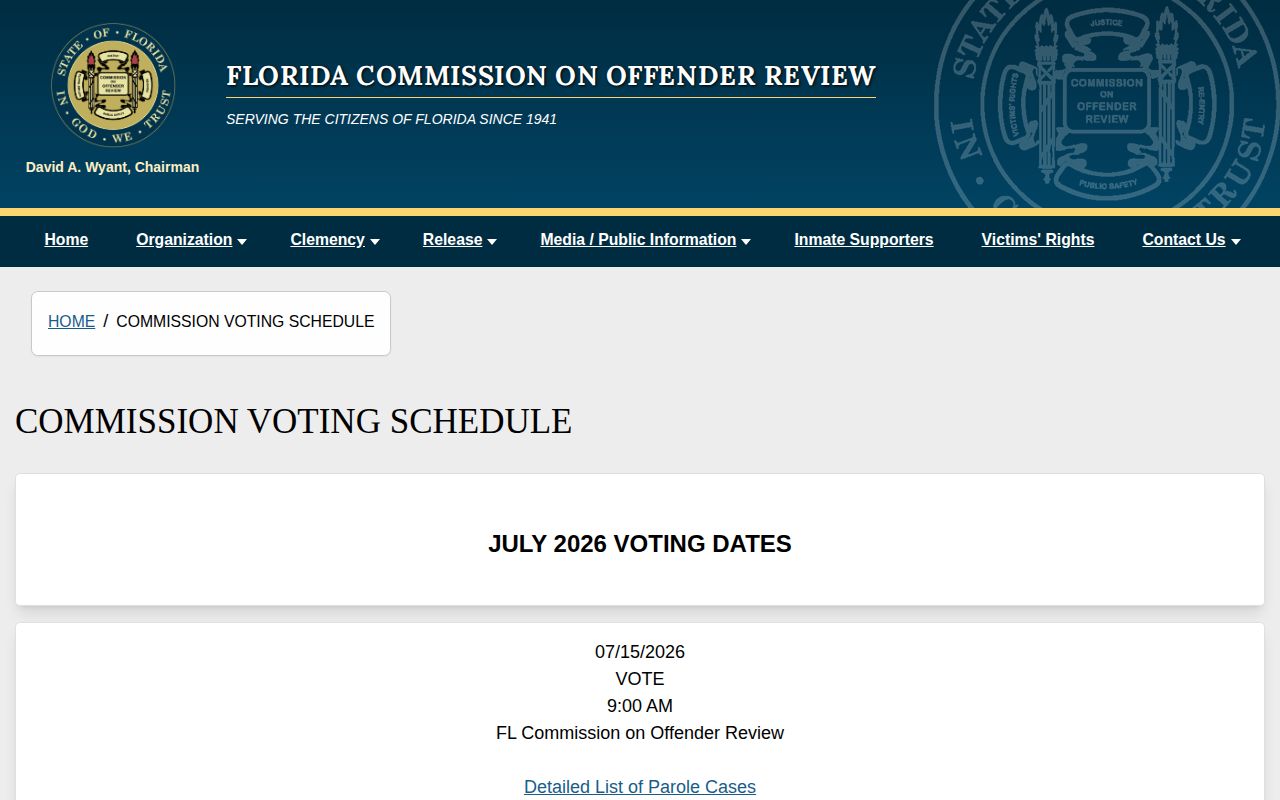
After a meeting, use the recorded order language and then confirm state-prison Date Out-Custody rather than rewriting a hearing date as release.
Flagler Release Care Coordination
A 2024 Flagler County packet describes EPIC's JET work inside Perry Hall. The documented model included screening and assessment during booking, clinical services, discharge planning, and care coordination intended to continue for up to 12 months after release during the stated grant period. FCSO separately describes SMART as an in-custody mental-health and addiction program. These named programs show a local link between detention and community care, but they are not proof that a particular person took part.
Current availability should be confirmed because grant periods, eligibility, and service capacity can change. A program connection also does not replace probation reporting or modify a court order. The Bunnell office remains the contact for an assigned FDC supervision record, while treatment or reentry coordination follows its own referral and consent process. Keep those roles separate when helping someone reconnect after release.
Note: Participation in JET or SMART cannot be inferred from a booking, release date, or FDC supervision status.
Flagler Supervision Record Requests
When the public result lacks enough detail, request the maintained record from FDC. Identify the DC number, full name, and date of birth when appropriate. Ask for the public supervision status record, supervision type, start and end dates, assigned office history, and discharge record if maintained. FDC can redact information protected by Chapter 119 or § 945.10 and may issue a charge estimate. The request should seek existing records, not ask staff to form a legal conclusion.
The Flagler Clerk provides separate copies of probation orders and later court rulings. Its felony page publishes a staff research charge of $2 per year per name and copies at $1 per page, while the online case portal is the first route for public material. Combining the court order with FDC status gives a stronger chronology than either record alone.
A request should preserve the exact status date. Supervision can move between active, suspense, absconder, revoked, and discharged states over time. A later public screen may not explain the earlier condition. Asking for the maintained status history, office assignment, and discharge entry gives the custodian a defined set of existing records to locate.